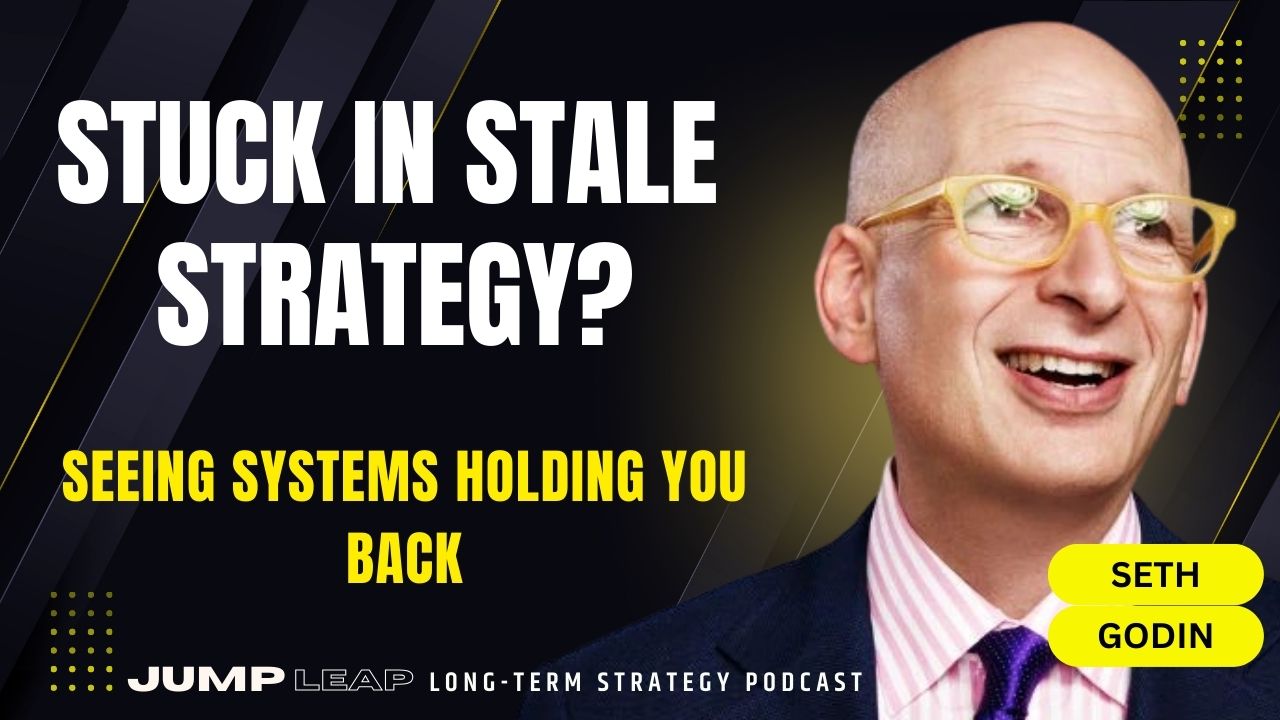
Ep 26 – Seth Godin – Stuck in Stale Strategy? Seeing Systems Holding You Back

Your company is built on systems – a whole bunch of systems which are intertwined.

Understanding how they work together is critical for any strategic changes you want to make.

However, you have also seen system diagrams. They look awful, with too much detail, and don’t capture the essence of what happens at any level of the organization. Plus, they take forever to build.

So you know you need to have this knowledge but how do you begin to grab hold of it so you can use it in your strategy? Where is the practical application?

Tune into this episode to hear from me and my special guest, Seth Godin, as we tackle and even try to solve this wicked problem together.

Plus – if you enjoy Seth’s work in this area, here’s a new experiment. I opened up a NotebookLM-like page on Cobundle – https://strategyconf.fwconsulting.com/resources-ep-26-with-seth-godin-strategy-and-systems/.

YouTube Chapters

0:00 – Introduction: Why Systems Thinking Matters

2:00 – The Invisible Systems That Control Your Decisions

5:00 – The Danger of Ignoring Systemic Change (Yahoo vs. Google)

9:00 – How Companies Get Stuck in Old Ways of Thinking

12:00 – Walmart’s Smart Decision to Delay Competing with Amazon

16:00 – Why Traditional Strategy Tools Are Failing You 20:00 – How to Help Leaders See Their Own System Blind Spots

25:00 – The Power of Storytelling in Strategy

31:00 – The Role of Emotion in Driving Change

37:00 – Breaking Free: How to Build Strategy That Actually Works

41:00 – Final Insights & How to Apply This to Your Work

This is a public episode. If you’d like to discuss this with other subscribers or get access to bonus episodes, visit longtermstrategy.substack.com/subscribe

Trumpian Disruption: Use Turbulence While Others Lose Their Minds

Donald Trump’s return to office has created an unprecedented distraction for CEOs. The daily whirlwind of headlines isn’t just noise—it brings real threats to businesses. So, how do you rise above the chaos and stay focused?

Many leaders thought COVID-19 was the biggest disruption of their careers. The world froze, and recovery took years.

But today, the relentless shocks coming from the U.S. make the pandemic seem mild in comparison. This is disruption on another level.

Some executives have responded by diving headfirst into crisis mode. They react to every shock, chasing after short-term fixes. Running on adrenaline, they believe sheer effort will get them through.

But a few leaders have realized that constantly playing firefighter isn’t just exhausting—it’s dangerous.

The Braddock Trap

History provides a warning: General Edward Braddock’s misstep at the Battle of the Monongahela (1755). When French and Native forces ambushed his troops, he abandoned his command post and charged into battle. He was shot and killed, leaving his soldiers leaderless. The British suffered heavy losses, and the war dragged on.

How can you avoid making the same mistake with your company?

Recognizing the Real Threat

Fortunately, you aren’t facing bullets. But your business does face existential risks—competition, regulation, new technology, and shifting customer expectations.

If you fail to lead, the consequences are real: layoffs, lost market share, declining shareholder value. Even your personal legacy is at stake.

But leadership doesn’t mean rushing into the fray. When you lose sight of the big picture, you abandon your role as a strategic leader. Instead, you need to fight your instinct to react impulsively and take a step back. Will you?

The solution lies in skills you likely didn’t master in school: foresight, strategy, and discipline.

You weren’t promoted for these skills, but today, they are essential. Admitting you need to strengthen them is the first step.

Set a Long-Term Course

History is full of companies that focused too much on short-term fires—only to collapse later.

Jack Welch’s tenure at General Electric set up his successor for failure, wiping out billions in value. Boeing’s leadership sacrificed safety, leading to catastrophic failures. Wells Fargo’s obsession with sales numbers fueled massive fraud.

Short-term goals are fine, but without a long-term vision, they can be disastrous.

Disruptions like Trump 2.0 push leaders into short-term thinking. Here are two common responses:

  1. Hit Pause on Strategy. Some leaders believe it’s impossible to plan for the future right now. They assume once things settle, they’ll return to long-term thinking.This logic is gaining traction in boardrooms. Executives point to COVID-19 as “proof” that focusing on immediate concerns is the right call.But what if Trump’s first month back is just the beginning of four years of upheaval?
  2. Use Disruption to Strengthen Long-Term Vision.Consider Nintendo. In the 1960s, declining playing card sales forced a shift. Instead of panicking, the company embraced change—experimenting with toys, arcade games, and eventually launching the NES in 1985. That move revitalized the gaming industry and transformed Nintendo into a global powerhouse.The lesson? Disruption can fuel reinvention.

The challenge isn’t choosing a destination. The real difficulty is getting stakeholders to commit to a 15- to 30-year vision—while chaos rages around them.

True leaders use today’s turbulence to build tomorrow’s success.

Learning from History

Take the collapse of the West Indies Federation in 1961. It was a devastating setback for regional unity. But instead of giving up, Jamaica channeled the disruption into its independence movement. Self-determination didn’t die—it just took a new path.

Most leaders, in both government and business, lack the skills to avoid the Braddock trap.

Be different. Warren Buffett put it best: “Be fearful when others are greedy, and be greedy when others are fearful.”

Now is the time to resist knee-jerk leadership. Step back, set a long-term course, and let today’s chaos propel you toward a future worth building.